Why Artificial Roof Chicago Projects Require Climate-Smart Materials
Chicago does not forgive weak roof choices. A roof covering below has to make it through freeze-thaw cycles, lake-effect wind, summer warm, driven rain, hail, ice dam conditions, and the sort of temperature swings that reveal every faster way in design and setup. That reality is why more owners, engineers, and builders are looking very closely at synthetic roofs, particularly on homes where look matters as high as long-lasting performance.
The conversation is not simply regarding picking a roofing that looks excellent on the first day. It is about selecting a material system that can deal with the regional environment without requiring consistent repairs, early substitute, or compromises in curb allure. In the Chicagoland market, where a roof may be asked to resemble slate, cedar, or drink while still fulfilling contemporary expectations for resilience, climate-smart material selection matters more than advertising language.
Synthetic roof has matured well beyond its very early credibility. The most effective products now integrate crafted polymers, UV stabilizers, effect resistance, color consistency, and lighter weight in manner ins which address functional issues on actual homes. For a synthetic roof covering Chicago job, that combination can be especially important, offered the item and the installer are both chosen with care.
Chicago climate is not one problem, it is numerous stacked together
Many roof conversations decrease environment performance to a single issue, typically snow or wind. In Chicago, the obstacle is collective. A roofing can bake under solid summer sun, after that sit under ice and snow months later. It can be dry one week and struck with wind-driven rainfall the following. Those duplicating cycles wear materials not just via huge tornados, but through consistent growth, tightening, dampness direct exposure, and surface abrasion.
Natural materials can be beautiful, but they come with well-known susceptabilities in this environment. Cedar can take in moisture, weather condition unevenly, and demand routine upkeep to stay in shape. All-natural slate is long lasting, yet heavy, breakable under impact, and pricey to fix when specific items split or slip. Traditional asphalt continues to be common, however numerous common items just do not supply the exact same design worth or life span expected on higher-end homes.
That is where building synthetic roofing goes into the conversation. It provides the visual character of standard premium materials while attending to a few of the real-world weaknesses those materials deal with in a place like Chicago. Weight, influence performance, freeze-thaw resistance, and installation versatility all come to be central problems, not side notes.
Why climate-smart materials matter much more on expensive homes
The stakes increase on customized residences, historic-inspired builds, and bigger homes with complicated rooflines. These projects frequently entail valleys, dormers, steep pitches, turret aspects, long eaves, and other details that transform a roofing system right into an architectural attribute. When the roofing system is prominent, house owners desire the depth, texture, and darkness lines of slate or hand-split cedar. At the same time, they do not want continuous upkeep staffs in the driveway.
Synthetic roofing for high-end homes functions ideal when it fixes both sides of that formula. It has to look convincing from the street and from close quarters. It likewise needs to stay stable on a roofing subjected to snow tons, thermal activity, and high winds. On premium homes, very early failing is more than a repair issue. It disrupts appearance, affects resale understanding, and can result in costly downstream damage in trim, outdoor decking, insulation, and interior finishes.
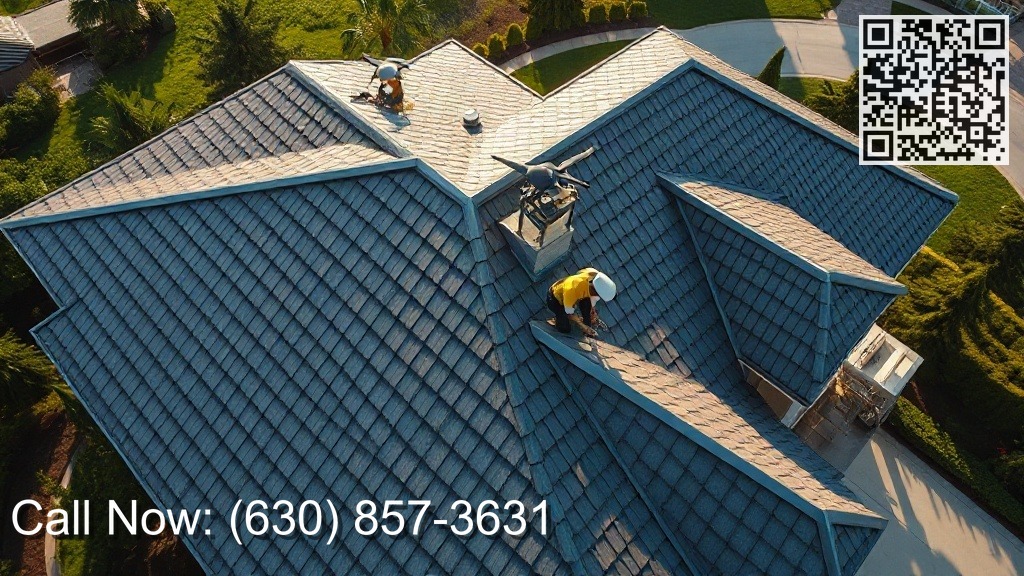
I have actually seen owners spend greatly on outside stone, copper details, and customized home windows, then attempt to economize on the roof covering assembly itself. In the Chicago location, that usually turns up later as deformed programs, recurring blinking leakages, ice dam problem, or a roof covering that ages erratically and undermines the whole elevation. Premium synthetic roofing makes good sense when it is treated as component of the building envelope, not as a decorative afterthought.
Synthetic roofing is lighter, which alters the structural equation
One of the least attractive yet essential benefits of lots of synthetic roofing systems is weight. All-natural slate can be exceptionally heavy. On some homes, specifically older structures or remodels, installing true slate may require significant structural testimonial and reinforcement. That includes cost, intricacy, and time.
A quality synthetic option typically delivers the slate or shake look at a fraction of the weight. For synthetic roof covering replacement work, this can open alternatives that would certainly otherwise be difficult or unwise. A home owner may achieve the aesthetic effect they desire without revamping parts of the roof framework. That can be especially useful during tear-offs on older Chicago-area homes where framing conditions vary and hidden surprises are common.
Lighter products also assist with managing on site. Teams can relocate them more efficiently, presented loads can be handled a lot more carefully, and certain roofing system information come to be much easier to carry out cleanly. None of that changes craftsmanship, yet it does improve the installment atmosphere. In my experience, much better problems usually cause much better workmanship.
Freeze-thaw resistance is where product science gains its keep
A Chicago roof covering does not just splash. It splashes, ices up, defrosts, refreezes, and duplicates the cycle over and over. That pattern punishes any product that soaks up water easily or creates small splits over time. As soon as moisture gets in at risk places, increasing ice can enlarge defects and accelerate failure.
High-quality artificial roof roof shingles and ceramic tiles are crafted to restrict moisture-related deterioration. The greatest items stand up to cracking, splitting, and side breakdown under low temperature levels. That matters most on subjected altitudes and in roofing system locations where snow remains. North-facing inclines, shaded valleys, and sections near chimney saddles are where climate-smart choices prove their worth.
This is also why not all synthetic roofs are equivalent. Some lower-end items might look attractive in a brochure but respond inadequately to long term UV exposure, repeated thermal biking, or effect events. The phrase costs artificial roof should imply more than a greater price tag. It needs to mirror testing, confirmed formulation, respectable manufacturing, and a record in demanding climates.
Hail and wind resistance are no more niche concerns
Homeowners across the area are much more knowledgeable about hailstorm danger than they were a decade ago. Tornado patterns have actually ended up being less foreseeable, and extra residential properties are experiencing damage from events that would certainly when have been thought about uncommon. Wind is the other continuous. Open up direct exposures, edge great deals, and homes near the lake or along more comprehensive rural corridors can face severe uplift pressure and wind-driven rain.
A climate-smart roof assembly for this market needs to represent both. Better synthetic roofing systems often offer solid impact scores and robust fastening patterns. That does not make them invulnerable, but it can reduce the likelihood of crack, dislodgement, or cosmetic damages serious adequate to need widespread replacement.
For an artificial professional roofer Chicagoland homeowners can trust, this is where item understanding issues. It is not enough to state a roof is long lasting. The professional ought to be able to describe how the product is rated, how it is attached, how it handles edge areas and ridge problems, and whether accessory components become part of an evaluated system. That degree of quality is usually a good indicator that the company deals with roof as an efficiency self-control as opposed to a sales script.
Appearance matters, but credibility issues more
There was a time when many synthetic roof items looked certainly artificial. Edges were too uniform, patterns repeated too predictably, and shades lacked the subtle variation seen in all-natural products. The best modern products have boosted significantly. Some building artificial roof accounts now develop darkness lines, appearance, and density that reviewed well from both the ground and closer inspection.
That makes them particularly appealing for domestic artificial roof covering in areas where architectural character carries weight. Partially of Chicago and the western suburban areas, proprietors want roofing systems that complement Tudor, French Nation, Colonial, or modern customized styles without considering products that might be impractical for the framework or the maintenance budget.
A well-selected artificial roofing system can resemble natural slate, hand-split cedar, or developer shake while providing more predictable weathering. The word foreseeable issues. With natural materials, some variant is part of the charm. However there is a distinction in between patina and damage. Artificial products, when made well, have a tendency to hold aesthetic consistency better throughout inclines and exposures, which can aid the roof appearance balanced years after installation.
The installer matters as long as the material
Even the very best product can underperform if the team does not understand the system. Artificial roofing system installation is not the same as conventional asphalt work, and it should not be treated this way. Layout, attachment, starter outlining, ridge transitions, air flow technique, underlayment choice, and blinking integration all should have attention.
That is why picking experienced artificial roof covering installers is essential. In the area, most roof covering failings do not occur because a material sales brochure made an incorrect promise. They take place because information were rushed, penetration flashing was improvisated, valleys were messed up, or ventilation was overlooked. On a Chicago roofing system, tiny mistakes obtain magnified by weather.
A reliable synthetic roof firm ought to walk a home owner with the full assembly, not just the noticeable roofing system covering. Underlayments, ice and water security, attic air flow, outdoor decking condition, blinking steels, and water drainage details all influence life span. If a proposition concentrates just on the roof shingles or ceramic tile itself, that is a warning sign.
Here are a few inquiries worth asking any synthetic roofer before signing a contract:
- Which certain product line are you installing, and why is it fit to this roofing and this climate?
- How will you handle prone areas such as valleys, eaves, shifts, and penetrations?
- What underlayment and ventilation approach do you advise, and how does it sustain the warranty?
- Have you completed comparable synthetic roof covering substitute tasks locally that I can review?
- Who manages installation on website, and exactly how are supplier specifications verified?
Those concerns reveal a great deal, rapidly. Experienced contractors normally answer them with confidence and useful detail. Inexperienced ones often tend to drift back toward general claims.
Suburban tasks bring their own considerations
An artificial roof covering Naperville IL task may face various site conditions than a dense urban roofing in Chicago appropriate, yet the environment logic remains the same. Rural homes often have bigger roof covering footprints, more complex altitudes, and greater direct exposure to crosswinds. Fully grown trees can include color, particles, and dampness retention in some areas, while open subdivisions can leave roofing systems fully exposed in others.
In Naperville, Hinsdale, Glen Ellyn, Barrington, and similar neighborhoods, layout expectations are usually high. House owners may desire the aesthetic richness of cedar shake or slate without the reoccuring maintenance problem. That is where residential artificial roofing commonly makes an engaging instance. It can meet building expectations while decreasing issues concerning rot, brittleness, inconsistent weathering, or excessive structural load.
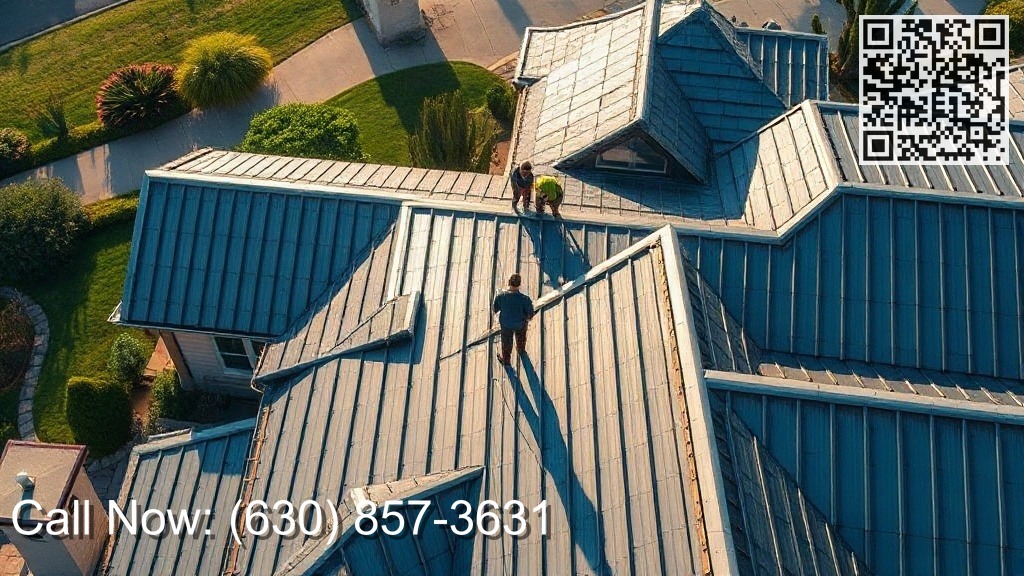
The best option still depends upon your house. A broad, low-slope transitional home might ask for a various profile and color blend than https://angelouhfu895.bearsfanteamshop.com/exactly-how-building-artificial-roof-resists-freeze-thaw-damage-in-midwest-homes a steep-pitched stone house with standard outlining. Excellent contractors do not require one product onto every job. They match roofing system geometry, neighborhood context, budget, and efficiency needs to a system that makes sense.
Energy efficiency becomes part of the climate-smart discussion
Roofing discussions in the Midwest usually fixate cold weather, however summer season warmth ought to not be ignored. Dark roofings can absorb substantial solar energy, and attic temperature levels can climb promptly without appropriate ventilation. While the roofing system covering alone is not a magic option, product option, color choice, and assembly layout all influence thermal behavior.
Some artificial roof covering roof shingles are readily available in colors and solutions that much better manage solar gain than older, darker materials. A lot more importantly, a correct synthetic roofing installment can be paired with modern-day underlayments and balanced air flow methods that assist the entire assembly perform a lot more regularly. That can sustain indoor convenience and reduce anxiety on heating and cooling systems, especially in upper-story spaces.
This is an area where reasonable assumptions matter. The roof covering is one item of a bigger system. Insulation degrees, attic room air sealing, vent design, and duct placement all shape energy efficiency. A significant professional will certainly discuss that partnership instead of overselling a solitary item feature.
Maintenance is reduced, not nonexistent
One of the most usual misunderstandings concerning artificial roof coverings is the idea that they eliminate upkeep completely. They do not. What they usually do is decrease the kind and frequency of upkeep compared to certain natural materials.
A roof covering still needs regular evaluation, specifically after severe tornados. Debris must be removed from valleys and gutters. Flashings still age. Sealers at details transitions may ultimately require focus. Branches can still scrape surface areas. Foot traffic can still harm improperly dealt with areas. The distinction is that high quality synthetic roof usually ask much less of the owner with time while holding appearance and efficiency much more reliably.
A practical upkeep regular generally includes the following:
- A visual assessment each springtime and fall.
- A specialist roofing system check after significant hail or wind events.
- Gutter and valley cleansing to avoid water backup.
- Prompt fixing of flashing or infiltration issues.
- Trimming looming branches that trap dampness or create abrasion.
That is convenient for a lot of house owners, particularly compared to the recurring care some natural roof covering materials require.
Cost should be judged over the life of the roof
Upfront price matters, yet it should not control the choice. Synthetic roof generally costs more than basic asphalt and less than several premium all-natural materials, though precise pricing differs extensively by item, intricacy, tear-off problems, and region. The far better comparison is life-cycle value.
If a house owner chooses a less costly roof covering that requires earlier replacement, even more repairs, or constant cosmetic attention, the obvious cost savings can go away swiftly. By comparison, premium artificial roof covering can make sense when it expands life span, shields building value, minimizes upkeep, and avoids structural reinforcement that larger products could require.
That is specifically appropriate in artificial roof replacement projects where the proprietor is already investing substantial cash on tear-off, disposal, blinking work, and site logistics. When the roofing system is open, it is worth asking whether the chosen material will genuinely fit your house and the climate for the following numerous decades.
Climate-smart roof is truly concerning educated restraint
The finest roofing decisions in Chicago are hardly ever the flashiest ones. They come from comprehending the building, the weather, and the compromises. Synthetic roof fits this market when it is selected for sensible reasons as long as aesthetic ones. It can supply the appearance of costs standard products while reducing weight, boosting durability, and alleviating upkeep demands in a punishing climate.
For proprietors taking into consideration artificial roofing Chicago alternatives, the goal should not be to chase fads. It ought to be to pick a material and an installer that value what this environment does to roofings year after year. That implies looking beyond surface appearance and asking how the roofing system will certainly do after ten winter seasons, several tornado periods, and lengthy stretches of summer season sun.
When a synthetic roofing contractor comes close to the project in this way, the result is generally a roofing that feels right on the house, carries out like it belongs in the area, and holds its worth under conditions that subject every weak choice. In Chicago, that is what climate-smart truly means.
When Quality Matters
Salvo Architectural Roofing Contractors
566 West 5th Ave Naperville, IL 60563
(630) 857-3631
 Ask ChatGPT
 Ask Grok
 Ask Perplexity
 Ask Claude
 Ask Google AI
 Ask You